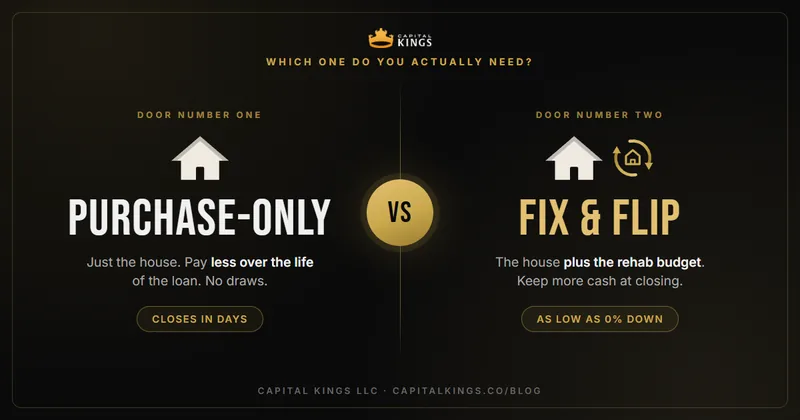
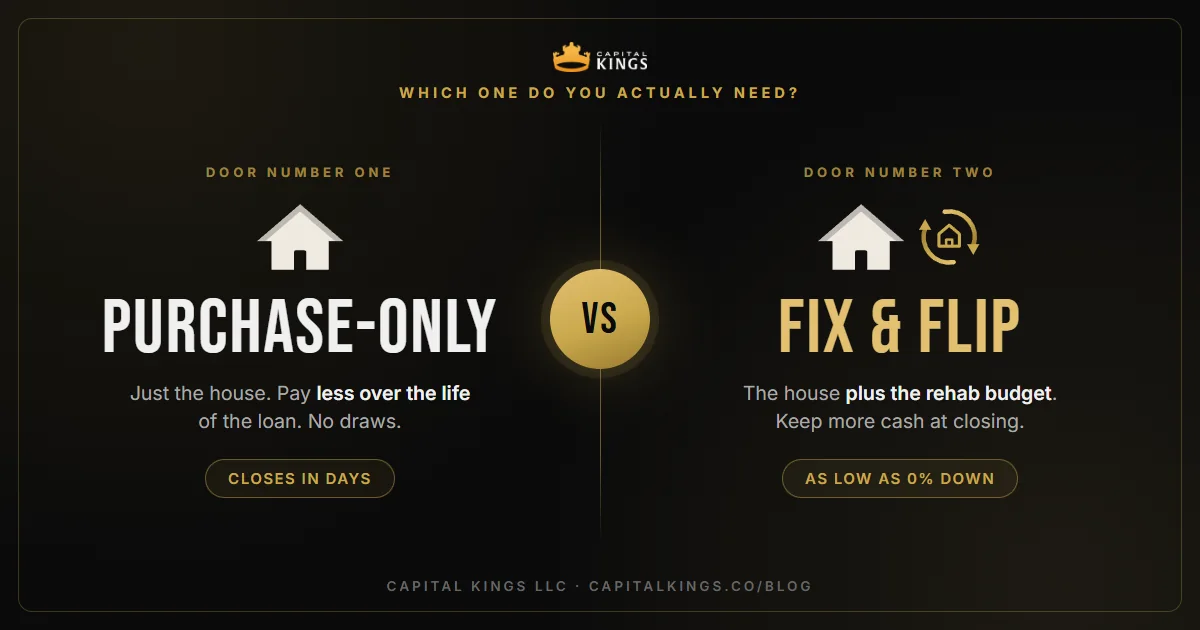
- A purchase-only hard money loan covers just the purchase, and you pay for the rehab yourself. A fix and flip loan covers the purchase plus a rehab holdback, released in draws as the work gets done.
- Purchase-only usually costs less in interest and fees over the life of the loan. Fix and flip usually needs less cash at closing, because the lender looks at ARV (the after-repair value) and can go as low as 0% down on the purchase.
- We just closed a purchase-only deal in Houston. The lender financed 87.5% of the purchase at 9.75% interest only, with no appraisal, and it took 5 business days from application to closing.
The Difference in One Sentence
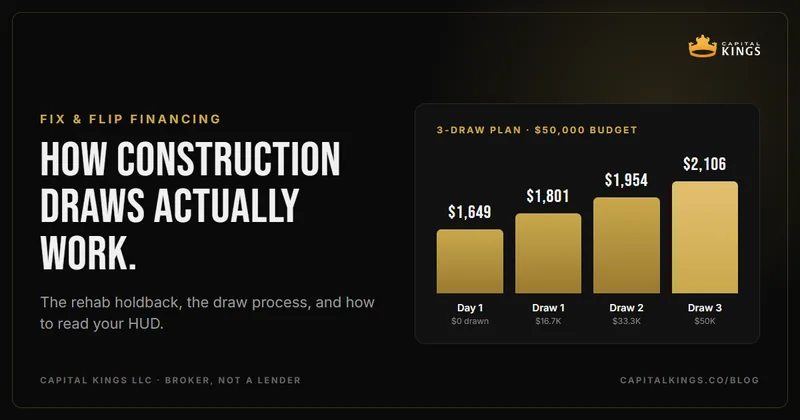
A fix and flip loan pays for the purchase and your rehab. It usually covers 90% to 100% of the purchase price and 100% of the rehab, and the lender holds the rehab money in escrow and releases it as the work gets done. A purchase-only hard money loan pays for just the purchase, usually 80% to 90% of the price, and the rehab is on you.
Almost everything else about the two loans, from what they cost to how fast they close, comes back to that one difference.
When Purchase-Only Makes Sense
I reach for purchase-only in three main situations:
1. The rehab is light and you can pay for it yourself. Paint, flooring, fixtures, the kind of budget you can cover from cash without sweating.
2. You're buying to resell without touching it. Wholetail deals where you clean the house up and list it, auction wins, estate purchases. The profit comes from buying it right, and there's little or no renovation to pay for.
3. The property is already in good shape and you need to close fast. Sometimes the plan is to refinance into a DSCR loan afterward and keep it as a rental.
Here's a Houston deal we closed recently. The borrower is a first-time investor, the single family house was already in good condition, and his plan is to put it right back on the market:
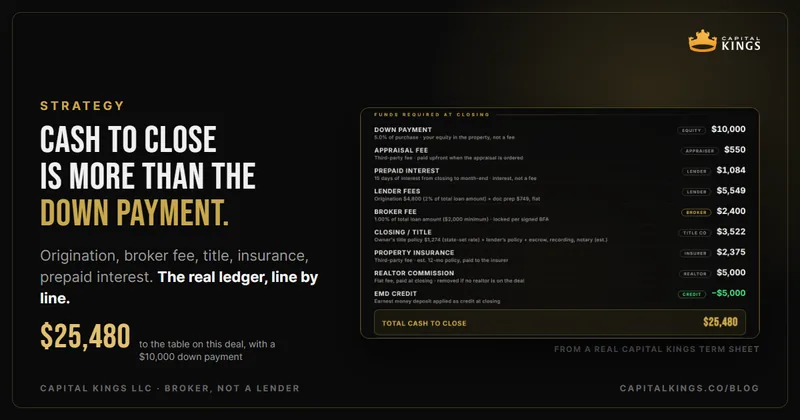
He paid just over $170K for a house he expects to resell for around $235K. He brought roughly $25K to the closing table, and the rest of his cash stayed in his own account. His closing costs came in low because there was no realtor on the deal and he got a credit at closing. Since there's no rehab money in the loan, he won't pay draw fees or sit through inspections, and there's no escrow paperwork for as long as the loan is open. The lender only did a soft credit pull.
What makes this one worth showing you is what the other quotes looked like. Two other lenders saw this exact same file. One wanted 40% down, because a small purchase-only bridge isn't the kind of loan they usually do. The other quoted a decent rate but stacked roughly five points of total fees on top of it. It was the same borrower with the same numbers, in the same week.
Picture him taking either of those quotes. The first meant coming up with roughly $68K down instead of $21K, three times the cash for the same house. The second meant more than $7,500 in points and fees before the loan even started. Neither lender was lying to him. Each one quoted what they wanted to charge, and no direct lender is going to tell you the shop down the street would beat them. The only way to know a quote is good is to see it next to nine others, and that's my whole job.
When Fix & Flip Wins (The Counterintuitive Part)
You'd think the bigger loan with rehab money attached would cost more to get into. It's usually the opposite.
A fix and flip lender sizes the loan off your after-repair value (what the house should be worth once the work is done) as well as the purchase price. Because they're lending against what the house will be worth, most good deals can close with 5% down on the purchase. Some close with 0% down, when your all-in costs sit comfortably under 70% of ARV. A purchase-only lender doesn't have that future value to lean on, so 10% down is the floor and 12.5% is typical for a first-timer.
Here's what that looks like on a $200,000 purchase:
The fix and flip loan does cost more. The rate is higher and origination (the lender's upfront fee) runs about a point more, so call it $2,000 to $4,000 more in fees. You'll also request your rehab money through a draw process instead of paying your contractor straight out of your checking account. But the gap in down payment is $15,000. If cash is what's holding you back, the more expensive loan is the one that actually lets you do the deal.
That's the honest way to frame it, and it's the exact sentence I use with every borrower. Work out which of those two matters more on your deal, and pick the loan that gives you that one.
Speed: Where Purchase-Only Wins Outright
Purchase-only is the fastest kind of hard money loan. There's no scope of work or rehab budget for the lender to review, and sometimes there's no appraisal either. The Houston deal came in on a Thursday around noon, and the contract said it had to close by the following Wednesday. It closed on time, 5 business days from application to closing. With the right lender and a clean file, a 72-hour close really is possible.
I tell every borrower two things up front. First, the clock starts when your documents are complete, which is usually later than the day you apply. If the bank statements or the purchase contract are missing, no lender on earth is fast.
Second, speed and shopping pull against each other. Give me three days and I'll get you closed with a lender I trust. Give me two weeks and I can put your file in front of more lenders and play them against each other, which is usually where the best terms come from. You can max out one of those, but not both.
If you've got a property under contract and you're not sure which loan fits, send it to me. I'll run it both ways and show you the numbers side by side.
You don't have to wait on me to see a number, either. Pick your loan on the application and you'll have a term sheet in minutes. Start at CapitalKings.Co.
Frequently Asked Questions
What is a purchase-only hard money loan?
How much is the down payment on a purchase-only loan?
Which is cheaper, purchase-only or fix and flip?
Can I add rehab funding to my loan after closing?
How fast can a purchase-only hard money loan close?
Do purchase-only loans require an appraisal?
Still not sure which one you need?
Both loans have their own page with current rates, caps and a worked example: the purchase-only loan page and the fix and flip loan page. If you have a property in mind, the instant term sheet will price it either way in about three minutes, no credit pull.
Price my deal both ways