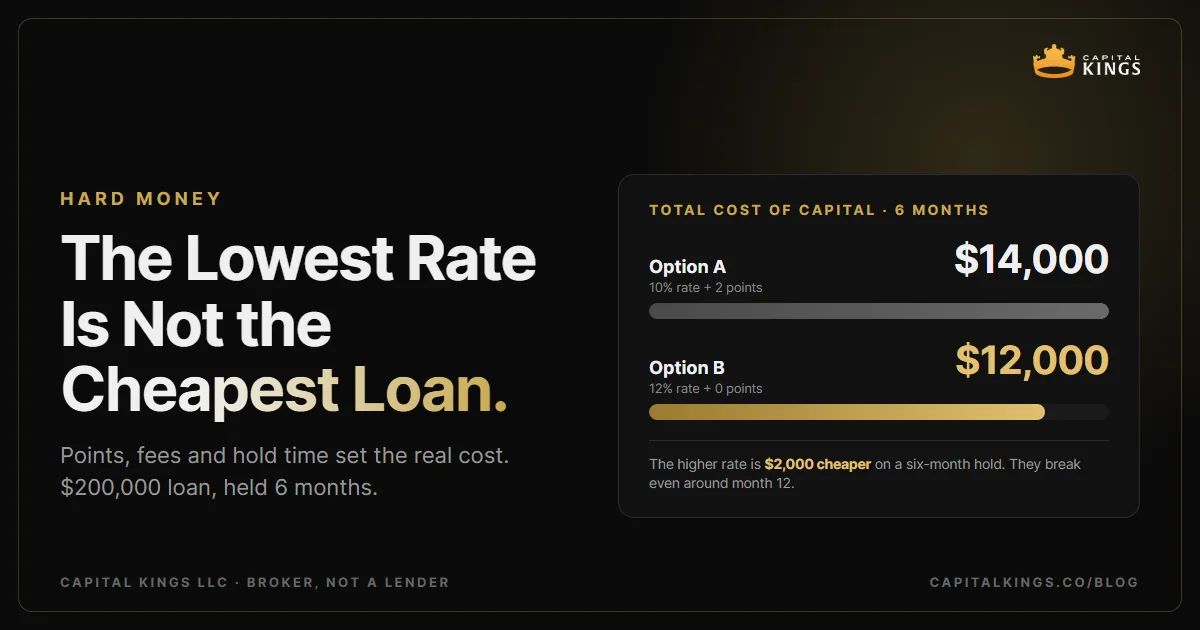
- Whether you pay more points or a higher rate comes down to how long you'll hold the loan. On a short hold, lower points tend to win. On a longer hold, a lower rate does.
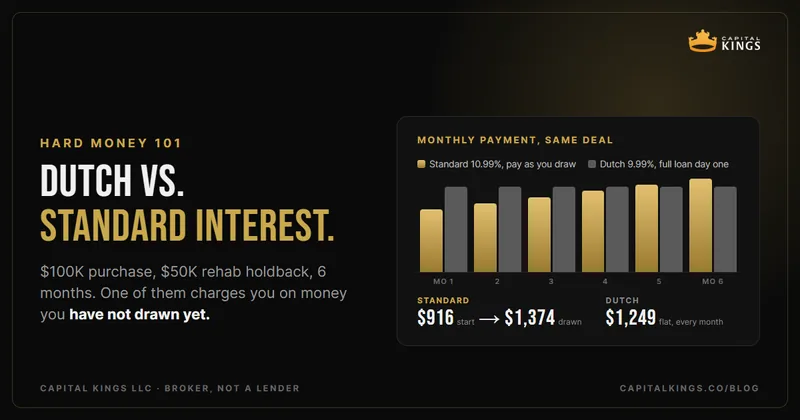
- Whether your loan uses standard or Dutch interest changes your real cost, so ask which one you're being quoted.
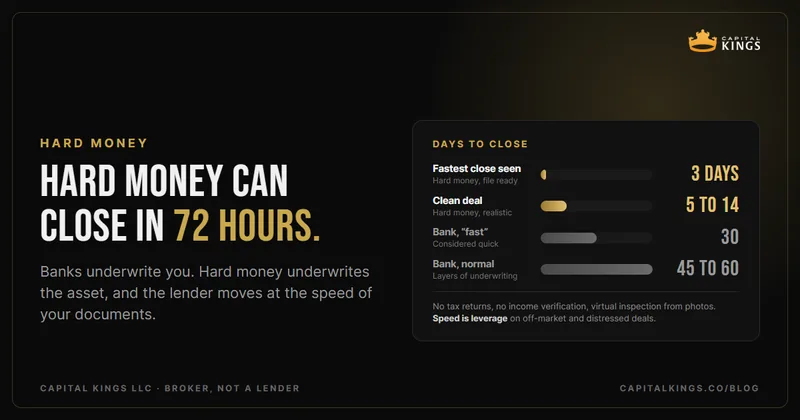
- The cheapest quote doesn't help you if the lender can't close on time, so reliability is part of the price.
A 10% rate with 2 points isn't the same deal as 11% with no points. The rate is the number everyone focuses on, but it's the wrong place to start. Two offers can have similar rates and cost you very different amounts once you add in points, fees, and how long you hold the loan. Here's how to compare lenders the right way, plus the fees most of them won't bring up unless you ask.
Points vs. Rate Comes Down to Hold Time
An origination point (a fee equal to 1% of the loan amount, paid at closing) is money you pay upfront. On a $200,000 loan, 2 points is $4,000 out of pocket the day you close, no matter how long you keep the loan. Some lenders charge fewer points and make up for it with a higher rate. Others charge more points for a lower rate. Neither one is automatically better. It comes down to how long you'll hold the loan.
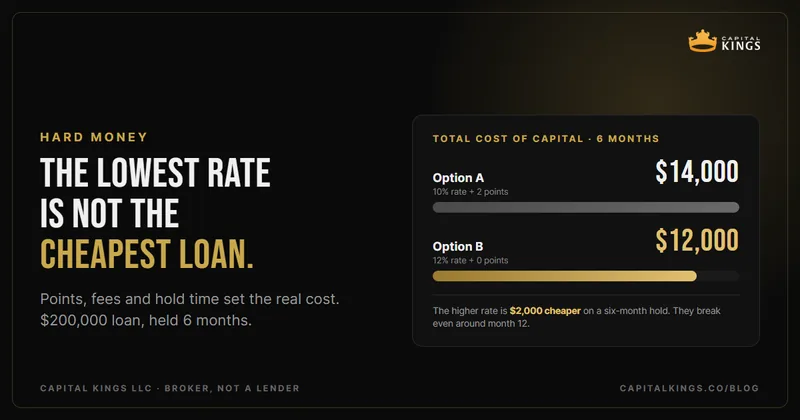
Here's a $200,000 loan held for 6 months:
- Option A: 10% rate, 2 points = ($200K x 10% x 0.5) + ($200K x 2%) = $10,000 + $4,000 = $14,000
- Option B: 12% rate, 0 points = ($200K x 12% x 0.5) + $0 = $12,000 + $0 = $12,000
On a six-month hold, Option B is cheaper even though the rate is higher. The two cost about the same right around the twelve-month mark. Only after a year does Option A's lower rate pull ahead. Most flips run six to nine months, so fewer points usually wins. The only way to know for sure is to run the numbers on your real hold time.
The Add-On Fees That Change the Math
This is where investors lose money without noticing, because these fees rarely come up unless you ask. These are the ones I check for on every term sheet:
- Prepayment penalties: a charge for paying off early. Sometimes it's a minimum amount of interest you owe no matter how fast you sell or refinance. If your plan is to be in and out fast, this one stings.
- Extension fees: many lenders give you a six-month term, then charge 1% or 2% to extend it. It's a buyer's market and properties are sitting longer, so know this number before you sign. There's a real chance you'll need it.
- Processing, doc prep, admin, and wire fees: small charges on top of your points that add up fast.
- Draw fees: depends on the lender, usually around $150-$400 every time you request a draw (your rehab money released in stages as you finish work). That's a fee just to get to your own money, though a few lenders don't charge one at all.
The sneakiest one is a back-end origination fee. The term sheet shows 1%, and you assume that's the cost of the loan. But some lenders quietly add another 1% or 2% on the back end. When you pay off, it comes straight out of your profit, and you never saw it coming. If you don't read the full terms, you won't catch it.
Ask If Your Quote Is Standard or Dutch Interest
A lot of lenders just hand you a rate and never tell you whether it's standard or Dutch interest. When I ask investors who are shopping multiple lenders whether they've asked about this, most of them tell me they don't know what the difference is. It matters, because it changes what you really pay.
The quick tell: a Dutch loan has one flat payment from day one, because you're paying on the full loan, rehab money included. A standard loan's payment starts lower and climbs as you draw. Here's Dutch vs. standard interest explained, with the math side by side.
Reliability Is Part of the Price
Rate and fees matter, but so does whether the lender can actually close. Say a lender quotes you a great rate and then finds a reason not to fund at the closing table. That lender just cost you the entire deal, your earnest money, and your reputation with the seller. The cheapest quote in the world doesn't do you any good if it falls apart at the worst possible moment.
Before you commit, ask how many loans they've funded in your market, ask for references, and ask what happens if the appraisal comes in low. Price matters, but on a deal with a tight deadline, reliability is often what matters most.
How I Compare Lenders for You
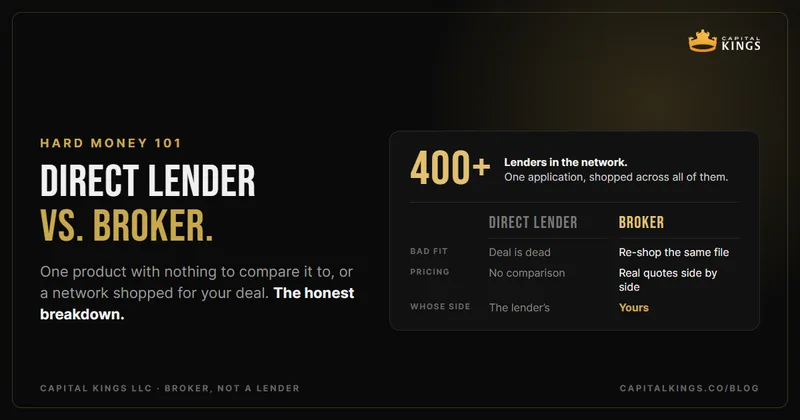
This is the part of the job I love. When a deal comes in, I'm not picking from a list of three. I narrow a network of 400+ lenders down to the handful that actually fit your deal, and I pull real quotes. Then I lay them out with the full cost included, meaning the points, the rate, the structure, and the fees most people never think to ask about. You see the strongest options with the real all-in number instead of the cleaned-up version on the front of the term sheet. You should never have to wonder what a loan is really going to cost you.
Frequently Asked Questions
Is the lender with the lowest rate always the cheapest?
What is a prepayment penalty on a hard money loan?
How can I tell if a loan is Dutch or standard interest?
What hidden fees do hard money lenders charge?
What should I look at besides rate and fees when choosing a lender?
Want the Real All-In Cost on Your Next Loan?
Send me your scenario and I'll shop it across my lender network and lay out the true cost of each option, every fee included. No surprises at the closing table. For a baseline, the fix and flip loan page shows every program I broker with the rate, the points and the down payment side by side.
Get Pre-Qualified →